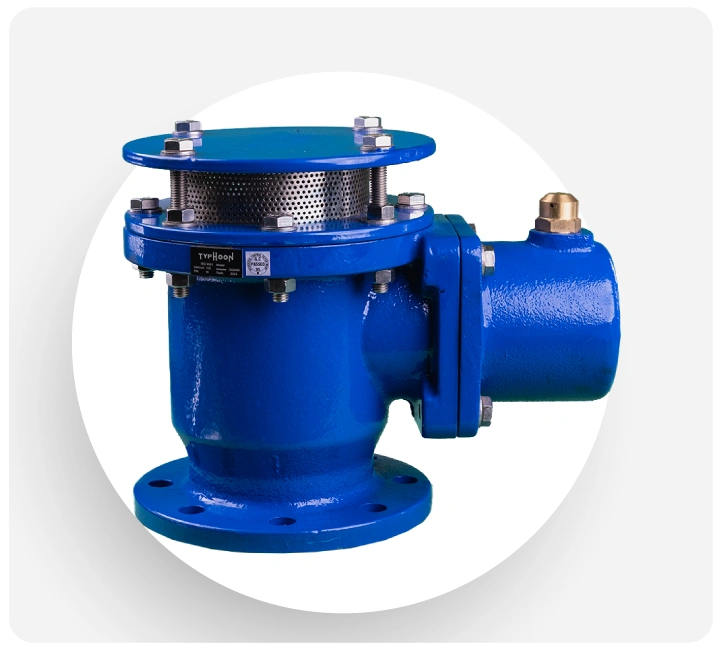
Double Chamber Air Release Valve
Enhanced Air Control with Dual Chamber Design
Double Chamber Air Release Valves are designed to provide efficient and controlled air management in pressurized pipeline systems through a dual-chamber configuration. This advanced design combines high-capacity air discharge with continuous automatic air release, ensuring safe and stable system operation under varying conditions.
The dual-chamber structure allows the valve to handle both large volumes of air during pipeline filling and small, accumulated air pockets during normal operation—offering improved performance compared to standard air release valves.
How It Works
- Primary Chamber (Kinetic Function)
Releases large volumes of air at high flow rates during pipeline filling, enabling rapid and smooth commissioning of the system. - Secondary Chamber (Automatic Function)
Continuously discharges small air pockets that accumulate during operation, preventing air buildup and maintaining system efficiency. - Vacuum Protection
Allows air intake when pressure drops occur or during pipeline draining, protecting the system from vacuum-related damage.
Key Features
- Dual Chamber Efficiency
Combines kinetic and automatic air release functions in a single valve body. - Controlled Air Discharge
Ensures smooth and stable release of both large and small air volumes. - Improved System Safety
Reduces the risk of water hammer, air locking, and pressure fluctuations. - Durable and Reliable Construction
Designed for long-term operation in demanding pipeline environments. - Optimized Performance
Provides better regulation and control compared to single-chamber designs.
Applications
- Water transmission and distribution systems
- Pumping stations
- Irrigation networks
- Industrial fluid pipelines
Why Choose a Double Chamber Air Release Valve?
The double chamber design offers a balanced and efficient solution for managing air in pipeline systems. By handling both high-volume air discharge and continuous air release within a single unit, it enhances operational stability, improves flow efficiency, and extends the service life of the pipeline infrastructure.