Safe and Balanced Flow with Impact-Free Air Valve Technology
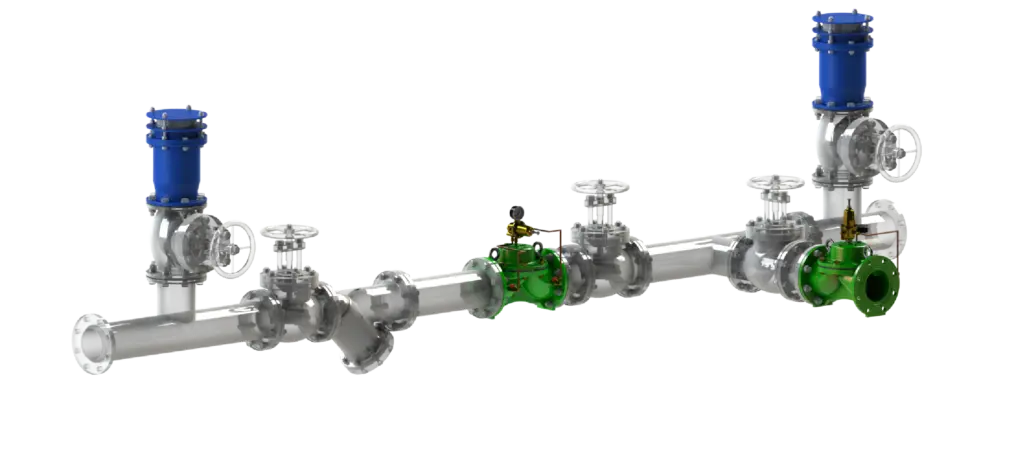
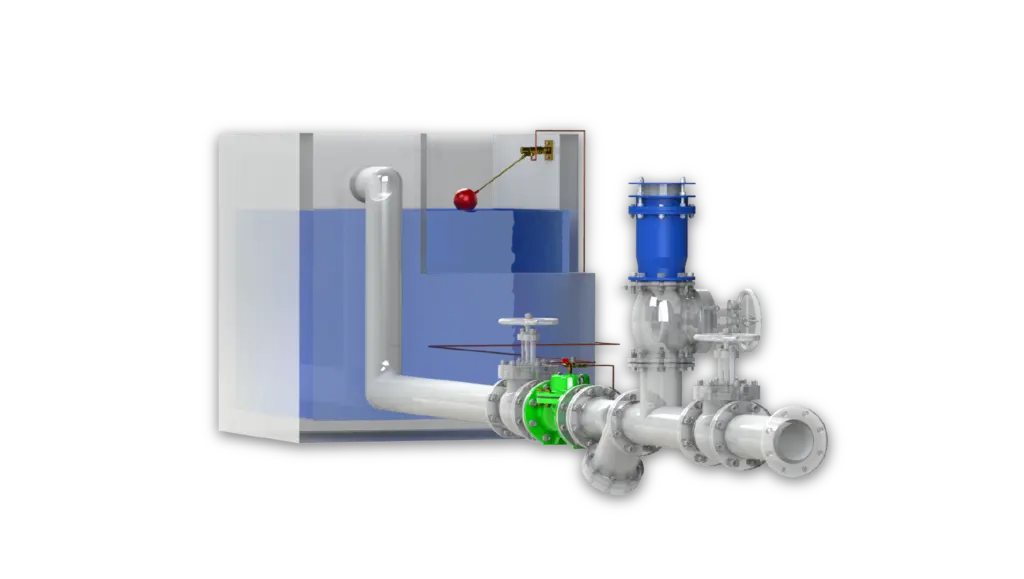
When the system is activated in deep well pumps, water and air in the suction line begin to move at high speed. This flow can create a shock effect (hydraulic shock) within the system when the water encounters a sudden closure at the air valve point. This can lead to significant mechanical stresses on the pipeline and equipment.
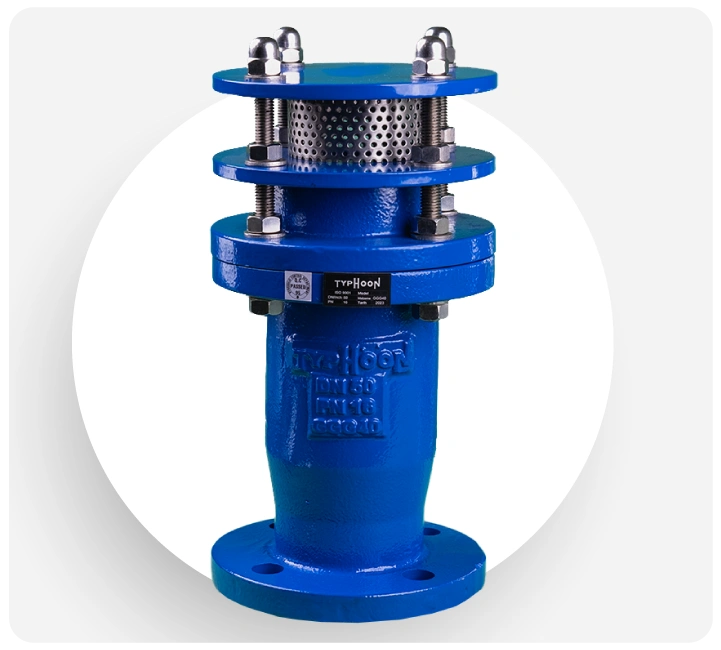
While this sudden closure occurs uncontrollably in standard air valve systems, impact-free air valve technology manages this process in a controlled manner. Instead of suddenly cutting off the high-flow incoming air valve, it is gradually slowed down. This minimizes pressure surges that may occur in the system.
Water Column Separation and Impact Management
Another critical situation that can occur in the system is water column separation. In this case, water columns separate from each other, creating low-pressure zones between them. Traditional air valves rapidly draw in a large amount of air during this time and then quickly release it. This rapid entry and exit increases the collision speed and impact effect during the rejoining of the water columns.
The shock-free air valve manages this process with a different principle:
- It performs air intake and exhaust in a controlled and gradual manner.
- It provides a “pulse-like” balancing instead of sudden release.
- It creates a buffering (cushioning) effect by leaving a certain amount of air and vacuum within the system.
In this way, the kinetic energy of the water columns is reduced, the impact intensity is decreased, and the system becomes more stable.
Result
Thanks to shock-free air valve technology:
- The risk of hydraulic shock (water hammer) is minimized.
- Pipeline and equipment life is extended.
- The system operates more quietly and stably.
- Failures caused by sudden pressure changes are prevented.
This technology provides a critical advantage for safe, long-lasting, and efficient operation, especially in deep well pumps and high-flow lines.